 Food tour
Season: Year-round
Hsinchu food tour: rice noodles, meatballs and temple snacks
- Rice noodles and gongwan pork meatballs
- Snack stalls around the City God Temple and a night market

Temple
The Hsinchu City God Temple is the spiritual and culinary heart of the old city. Founded in 1748, it is home to the highest-ranking City God in Taiwan, and the lanes around it are packed with stalls selling the city’s famous rice noodles and meatballs. Entry is free.
Every Chinese city once had a City God, a guardian who protects the town and judges the souls of the dead. Hsinchu’s temple was founded in 1748, when the city was still the walled town of Zhuqian, and its City God is the highest-ranking in Taiwan. People come from across the island to pray here, and the temple is busy from early morning until late at night.
The temple forecourt and the lanes around it are a covered food market, and for many visitors this is the real reason to come. Try a bowl of Hsinchu rice noodles, gongwan pork meatball soup, runbing spring rolls or a plate of duck. Most stalls open from late morning into the evening. See our guide to what to eat in Hsinchu.
Around the middle of the seventh lunar month, usually in August or September, the City God is carried through the streets of the old city to inspect his territory, with drums, firecrackers and the giant generals. It is one of the liveliest temple events in northern Taiwan.
Book ahead
Food tour
Season: Year-round Walking tour
Season: Year-round
 Day trip
Season: Year-round
Nearby
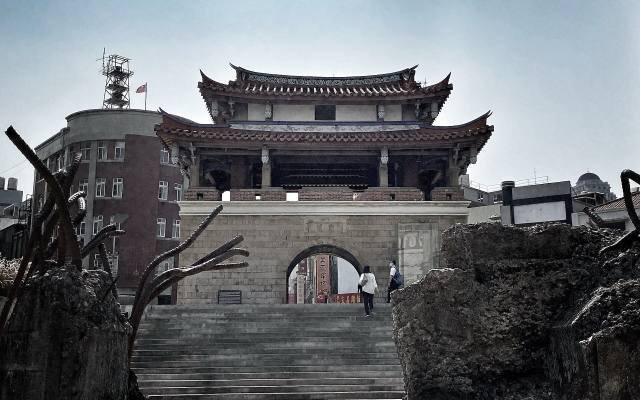 Landmark
The last gate of the old city walls
The stone gate tower finished in 1829 for the city walls of Zhuqian. It is the only gate still standing, on a plaza at the heart of the city, and is lit up at night.
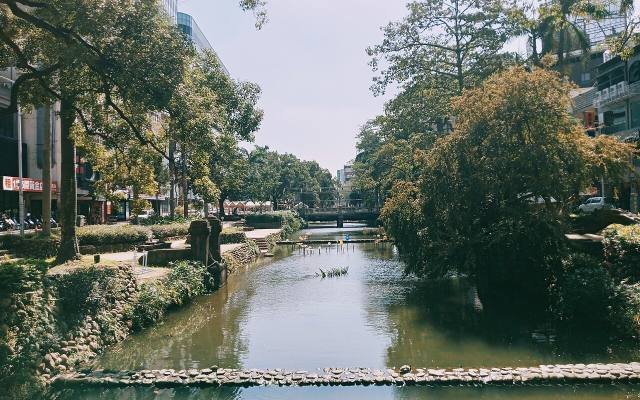 Park
A green walk around the old walls
The moat of the old city walls, turned into a long, shady park with paths, pools and bridges that link the East Gate with the station and the City God Temple.
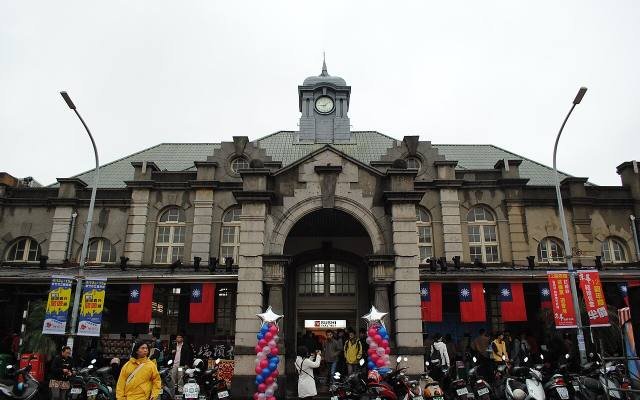 Landmark
Taiwan’s oldest station building
Opened in 1913, the oldest railway station building still in use in Taiwan, with a grand stone front and a clock tower, five minutes’ walk from the East Gate.